Capital Raising Document Workflow: From Preparation to Close
Build a controlled capital raising document workflow for preparation, investor outreach, diligence, approvals, closing and post-round records.
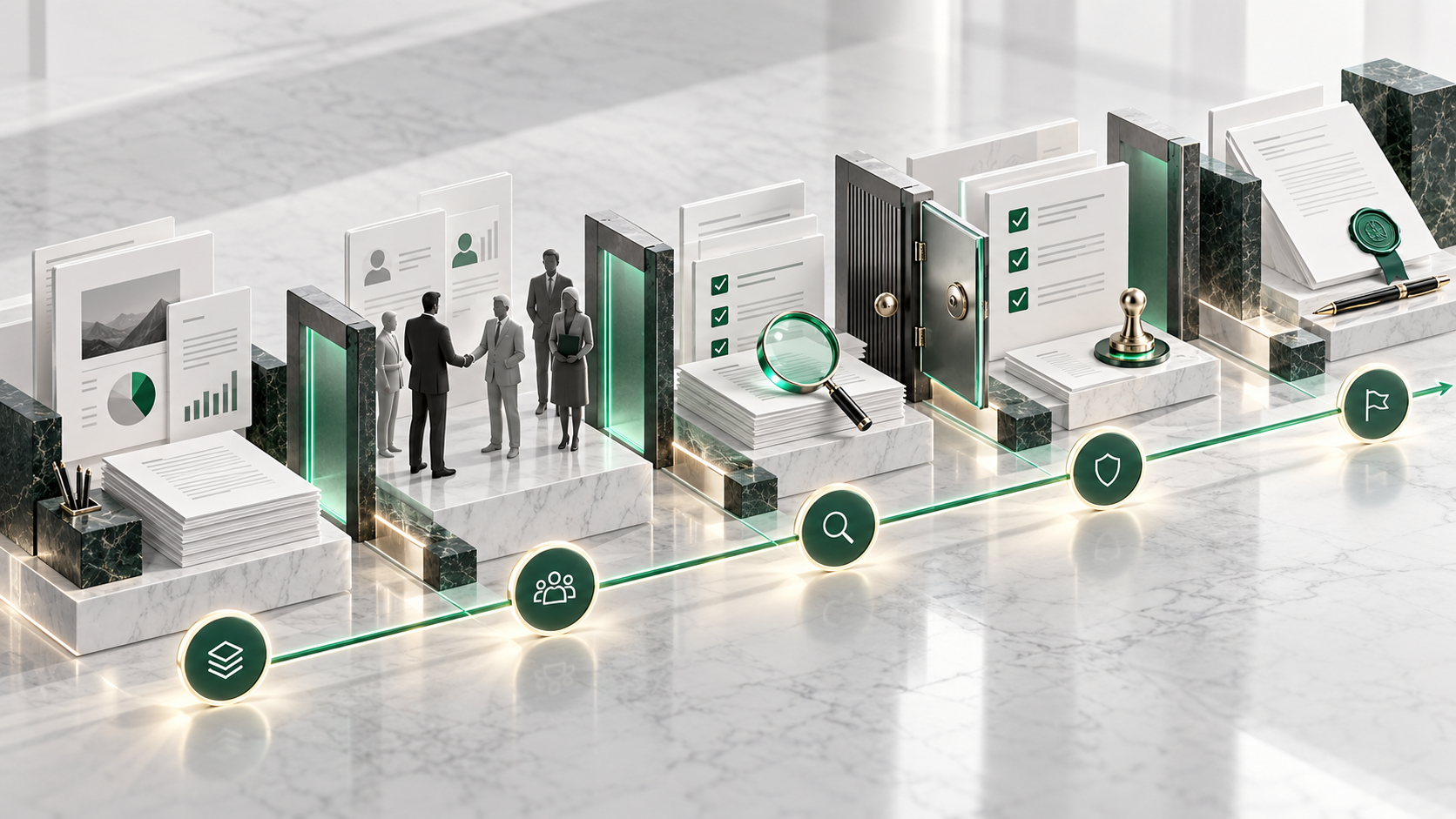
A capital raising document workflow controls how fundraising materials are created, approved, shared, updated and preserved from planning through closing. It connects the pitch deck, financial model, investor list, diligence room, Q&A, legal documents and final corporate record. Without a defined workflow, teams often send conflicting numbers, lose track of access and store executed documents across email threads.
The workflow should match the type of raise. A seed equity round, growth financing, private credit process and fundraise by an investment vehicle have different participants and legal requirements. The operating principles remain similar: establish authoritative documents, release information in stages, verify recipients, record material changes and preserve the final record.
This article offers a practical framework, not legal, securities, tax or investment advice. Engage qualified advisers for the actual transaction.
The short answer
Organize the process into six stages: readiness, approved outreach, management of interest, active diligence, transaction execution and closing records. Give each document an owner, reviewer, status, confidentiality class and source-of-truth location. Do not use the same uncontrolled folder for internal drafting and investor disclosure.
Stage 1: define the raise and information boundary
Before building a deck or room, write a one-page process brief. It should state the instrument or financing route under consideration, target amount, expected investor types, jurisdictions, timeline, internal decision makers and advisers. It should also identify information that cannot be shared without additional review.

Figure 1: Staged access lets founders and counsel disclose the right fundraising documents to each stakeholder at the right time.
This staged workflow demonstrates how document access should expand proportionally as investor diligence progresses:
The brief prevents the document workflow from becoming a generic collection. A strategic investor may raise competitive sensitivity. A lender may require cash-flow, collateral and covenant evidence. A regulated business may need specialist reviewers. These conditions affect access groups and disclosure stages.
Create an authority map. Identify who may approve the deck, financial model, investor communications, data-room release, legal responses and executed documents. A fast process still needs decision rights.
Stage 2: create authoritative working documents
The core working set often includes the pitch deck, financial model, capitalization information, use-of-funds plan, key metrics, operating plan and a transaction summary. Each item should have one source location and an accountable owner.
The deck and model must reconcile. Revenue, burn, runway, headcount and milestones should use consistent periods and definitions. If a number is intentionally presented differently, explain why. Maintain a metric dictionary for company-defined measures.
Use a document register with these fields:
| Field | Purpose |
|---|---|
| Document ID | Stable reference independent of filename |
| Title and version | Human-readable identity |
| Owner | Person responsible for accuracy |
| Reviewer | Person authorized to approve release |
| Status | Draft, approved, released, superseded or executed |
| As-of date | Period or point in time represented |
| Confidentiality class | Intended audience and restrictions |
| Source location | Authoritative internal copy |
| External location | Controlled link or room path |
Avoid using email attachments as the authoritative version. They create uncontrolled copies and make later corrections difficult.
Stage 3: separate internal preparation from external publication
Internal collaboration requires comments, change tracking and working assumptions. External disclosure requires a stable approved copy. Mixing both in one folder risks exposing comments, formulas, prior versions or hidden data.
Create a preparation area available only to the internal team and advisers. Publish approved PDFs or controlled files into an outreach or diligence area. If a document is updated, route the new version through review before replacing the external copy.
Inspect spreadsheets for hidden sheets, comments, external links and embedded personal information. Inspect presentations and documents for speaker notes, tracked changes and metadata. Export and review the exact file that investors will receive.
Stage 4: initial investor outreach
Initial outreach usually requires less information than diligence. A deck, concise company summary and approved follow-up material may be sufficient. Use a controlled link rather than an attachment when revocation, expiry or recipient-level activity is valuable.
The following governance matrix summarizes the required access controls, permissions, and audit requirements for each stage:
Maintain an investor contact register that records owner, status, last contact, materials sent, confidentiality status and next step. Do not treat an open event as investor consent or interest. Analytics can help confirm delivery and prioritize reasonable follow-up, but formal responses remain the decision signal.
Consider whether an NDA is appropriate for the stage and investor type. Some institutional investors may avoid signing broad NDAs before an initial review. Counsel should set the policy and approved form rather than leaving each team member to negotiate separately.
Stage 5: qualify access to active diligence
When an investor moves into active diligence, give access to a structured data room appropriate to the stage. Typical sections include corporate, capitalization and financing, financial, commercial, customers, product and technology, intellectual property, people, legal and compliance.
Access should be staged. General reviewers may see core materials, while counsel or specialists see restricted content. Avoid releasing customer-level data, personal information or detailed security material merely because an investor requested the room.
Test the external experience using guest accounts. Confirm identity, permissions, search, download, notifications and mobile behavior. Review active access regularly and remove people who no longer participate.
Stage 6: manage diligence questions
Questions should enter one controlled register or platform workflow. Record the investor, question, category, owner, internal reviewer, due date, answer status and supporting document. An answer should not be released simply because an owner drafted it.
Create response rules. Routine navigation questions may be answered by the room administrator. Financial, legal, tax, product and security claims require subject-matter review. Material corrections should be reflected in the authoritative document, not buried in a private email.
Decide whether an answer is specific to one investor or suitable for all authorized parties. Consistency matters, but confidentiality and process fairness may require different visibility.
Stage 7: manage parallel investor conversations
Fundraising pipelines rarely move uniformly. One investor may review the deck, another may perform diligence and a lead may negotiate terms. The document workflow must ensure each party sees the correct approved stage without receiving another party's confidential communication.
Use separate recipient groups and deal workspaces where necessary. Do not identify investors to one another through file names, notifications or user directories. Keep term sheets, allocation discussions and negotiation documents in restricted locations.
Update the process register when access changes. A verbal decision should not be the only record of who can see sensitive information.
Stage 8: term sheet and transaction execution
Once a proposed investment moves toward documentation, the volume and sensitivity of materials increase. Counsel may circulate drafts of the term sheet, subscription or purchase agreement, investor rights, voting arrangements, disclosure schedules and board or shareholder approvals.
Separate negotiation drafts from the diligence room. Use a controlled legal workstream with clear naming and version ownership. Identify which copy is for comments, which is approved for signature and which is fully executed. Do not overwrite an executed file with a later convenience copy.
Track conditions to closing, signatures, funds flow, required consents and corporate approvals. The checklist should identify owner, evidence and completion date.
Stage 9: close and reconcile
At closing, reconcile the capitalization table, securities records, signed documents, approvals and funds received. Confirm that every execution packet is complete and that side letters or special rights are stored with the relevant transaction.
Create a closing set organized for future governance and the next financing. Include an index, executed agreements, approvals, updated capitalization evidence and material investor communications required for the record. Restrict external access according to the agreed timeline.
Do not preserve analytics or personal data indefinitely by default. Apply records, privacy and contractual requirements.
Stage 10: post-round investor reporting
The end of fundraising begins a new document cycle. Define the cadence and owner for board packs, investor updates, financial reporting, consent requests and material notices. Keep recurring reporting separate from the closed diligence room unless there is a deliberate reason to reuse the platform.
Maintain consistency between post-round metrics and the definitions used during the raise. Explain changes in methodology. A reliable reporting discipline makes the next diligence process easier.
Access model by document type
| Document | Initial outreach | Active diligence | Restricted review | Closing record |
|---|---|---|---|---|
| Pitch deck | Yes | Yes | Yes | Optional |
| High-level metrics | Selected | Yes | Yes | Optional |
| Cap table | Summary or none | Current approved copy | Detailed support | Final updated copy |
| Customer-level data | No | Usually summary | If justified and approved | According to obligations |
| Security evidence | No | High-level | Approved specialists | As required |
| Term sheet drafts | No | Named parties only | Named parties only | Final executed copy |
| Subscription documents | No | Named parties only | Named parties only | Complete executed set |
This matrix is an example. Counsel and the transaction team should adapt it.
Controls that matter more than the platform name
- One source of truth for every controlled document
- Named approval before external release
- Recipient identity and group-based access
- Expiry and revocation where appropriate
- Clear distinction between views and downloads
- Material update notification
- Question ownership and answer approval
- Complete signature and closing checklist
- Exportable record and defined retention
For a small outreach package, teams may consider controlled pitch deck sharing with SendNow and test recipient verification, expiry, revocation and analytics. A complex raise may require a full VDR with granular groups, Q&A and archive functionality. Tool selection should follow the process requirements.
Related reading includes investor document management, venture capital data room guidance and startup fundraising data room structure.
Quality checks before investor access
- Deck and model use the same approved figures and periods.
- Capitalization reconciles with financing and equity records.
- Executed documents are clearly distinguished from drafts.
- Metrics have definitions, sources and as-of dates.
- Sensitive data is minimized, redacted or restricted.
- External guest accounts have been tested.
- The Q&A approval route is operating.
- Update and replacement procedures are documented.
- Term-sheet and legal negotiation spaces are separate.
- Closing archive and revocation owners are named.
Frequently Asked Questions
What documents are needed to raise capital?
The set depends on stage and instrument. Common materials include a deck, model, capitalization information, financial reporting, metrics, corporate records, material contracts, intellectual property evidence and transaction documents.
When should a startup open its data room?
Open it when an investor enters active diligence and the first approved document set is coherent. Initial outreach often needs only controlled access to selected materials.
Should every investor receive the same access?
No. Access may depend on diligence stage, role, confidentiality and legal requirements. Use an approved model and avoid arbitrary differences.
Can engagement analytics replace investor follow-up?
No. Analytics can confirm activity and guide timing, but direct communication and formal diligence responses remain essential.
How should financial models be versioned?
Label the date, scenario and status. Maintain one authoritative working model and publish only approved copies. Preserve material prior disclosures when replacing them.
What happens to the data room after closing?
Export the required transaction record, revoke external access according to the plan and apply retention or deletion obligations. Recurring investor reporting may use a separate workflow.
Is this workflow suitable for debt fundraising?
The operating principles apply, but lenders may require debt-specific materials such as cash flows, collateral, borrowing history, covenants and downside scenarios.
Sources and verification notes
- SEC: Capital raising building blocks
- NVCA model legal documents
- NIST SP 800-53 Rev. 5
- UK ICO: Data protection by design and default
Sources were reviewed on October 3, 2026. Obtain transaction-specific legal, tax, accounting and investment advice.