Pharma & Life Sciences Data Room 2026: Licensing, M&A & FDA
Pharma and biotech companies use VDRs for clinical trial data sharing, drug licensing negotiations, M&A due diligence, and FDA regulatory submissions. Learn the folder structure, compliance requirements, and best platforms.


On this page (14 sections)▼
Life Sciences and Pharma Data Room: What Biotech Companies Need for Licensing, M&A, and FDA Review (2026)
TL;DR: Life sciences companies use VDRs differently from every other industry. FDA 21 CFR Part 11 compliance, clinical trial data integrity, and pharmaceutical IP protection require features that standard M&A rooms do not prioritize. The global pharma M&A market reached $225 billion in 2024 (Refinitiv). For large pharma, Datasite and ShareVault are purpose-built; for mid-size biotechs, Ansarada, Firmex, and Intralinks are increasingly the default choice.
Table of Contents
- Why Life Sciences Data Rooms Are Different
- The 4 Key Use Cases for Pharma VDRs
- FDA 21 CFR Part 11: What It Means for Your Data Room
- The 8-Category Pharma Data Room Folder Structure
- Comparing VDR Platforms for Life Sciences
- The Pharma Licensing Deal Room: What Partners Expect
- What the Community Says
- Related Articles
- Frequently Asked Questions
Why Life Sciences Data Rooms Are Different
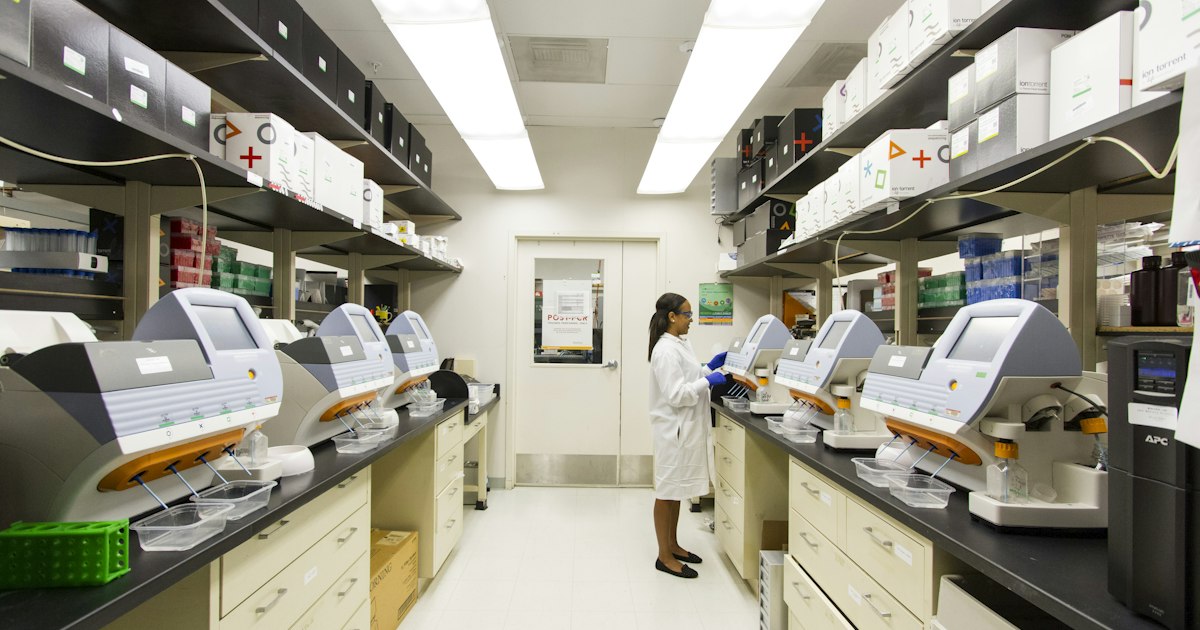
Walk into any bulge-bracket M&A deal room and you will find a recognizable structure: financial statements, legal contracts, HR data, IP schedules. A pharmaceutical or biotech data room looks nothing like this.
Clinical trial datasets representing hundreds of millions in R&D investment sit alongside patent expiry schedules that will determine the entire commercial trajectory of the deal. A single Phase III dataset can represent $500 million or more in development cost — and its integrity cannot be questioned by regulators, acquirers, or licensing partners. FDA 21 CFR Part 11 requires that electronic records used in regulatory submissions be authentic, tamper-evident, and fully auditable. That requirement does not exist in any other industry with the same legal force.
Patent cliffs are another uniquely pharma complication. If a compound's primary patent expires in three years and the acquirer is valuing the deal based on that compound's exclusivity, a missed secondary patent filing or an incomplete IP schedule in the data room can unravel a deal entirely. In 2024, PwC's Life Sciences Deals Outlook identified data room disorganization — particularly in clinical and regulatory files — as one of the top three reasons pharma deals slip or reprice during due diligence.
Standard M&A VDRs are engineered for financial and legal workflows. Life sciences VDRs must support clinical data packages organized by trial phase, regulatory correspondence with the FDA and EMA, CMC (Chemistry, Manufacturing and Controls) data, and CONSORT-compliant data sharing protocols. The stakes for getting the structure wrong are measured in deal valuation, regulatory approval timelines, and in some cases, patient safety.
The 4 Key Use Cases for Pharma VDRs
Life sciences companies encounter data rooms in four distinct contexts, each requiring different configurations.
Drug Licensing and Partnering
When a biotech company seeks to out-license a compound to a larger pharma partner, it must share pre-clinical data, Phase I and Phase II results, IND (Investigational New Drug) correspondence with the FDA, mechanism of action documentation, and early CMC data — all under a Confidential Disclosure Agreement (CDA). The data room must allow the licensing partner's scientific and regulatory teams to access highly technical documents while protecting the data from being retained after negotiations collapse.
Dynamic watermarking is particularly important in this context. Clinical data packages can be reproduced even from memory. Watermarking every page with the reviewer's name and timestamp deters document retention and provides forensic accountability if pre-publication data leaks.
M&A Due Diligence
Both sell-side and buy-side life sciences M&A require comprehensive data rooms. Sell-side management teams must organize the full clinical pipeline by development phase, with regulatory status, market exclusivity timelines, and competitive landscape data for each program. Buy-side teams — typically a large pharma acquirer with internal scientists, regulatory experts, and commercial analysts — will request access to the full room and submit hundreds of written Q&A inquiries through the platform.
The $225 billion global pharma M&A market in 2024 (Refinitiv) was driven largely by large-cap acquirers seeking late-stage pipeline assets to offset patent cliff exposures. In every one of those deals, a data room was the primary medium through which the clinical and regulatory case for the acquisition was made.
FDA Regulatory Submissions
While the FDA's primary electronic submission gateway is the Electronic Submissions Gateway (ESG) and eCTD format, pharmaceutical companies increasingly use VDRs to organize pre-submission document repositories — particularly for Type C meetings, pre-NDA meetings, and responses to Complete Response Letters (CRLs). A well-organized regulatory document room ensures that cross-functional teams (regulatory affairs, clinical, CMC) can access the most current versions of submission-ready documents without version confusion.
Clinical Trial Data Sharing
CONSORT (Consolidated Standards of Reporting Trials) guidelines and the ICMJE (International Committee of Medical Journal Editors) require researchers to share individual patient-level data upon reasonable request after publication. VDRs provide a controlled environment for this data sharing — with access controls, audit trails, and the ability to grant time-limited access to academic researchers under a data use agreement. The European Medicines Agency's CTIS portal has accelerated transparency requirements for clinical trial data in the EU since 2022.
FDA 21 CFR Part 11: What It Means for Your Data Room

Title 21 of the Code of Federal Regulations Part 11 governs the use of electronic records and electronic signatures in FDA-regulated industries. It applies to any electronic system used to create, modify, maintain, archive, retrieve, or transmit records that are required by FDA regulations.
What 21 CFR Part 11 requires of an electronic document system:
Audit Controls — the system must record and examine activity to detect and report apparent security violations. Every access event must be logged with the user's unique identifier, timestamp, and action taken.
Authority Checks — only authorized individuals can use the system, execute operations, and access records at various levels.
Device Checks — the system must check the validity of the source of data input or operational instruction.
Closed System Controls — when the system is a closed system (access limited to authorized users), it must use validation, audit trails, record retention and copying procedures, and use of computer-generated, time-stamped audit trails.
Electronic Signatures — electronic signatures must be unique to one individual and must not be reused or reassigned.
In practical terms, this means a pharma data room must maintain a complete, unalterable log of every document access, every version change, and every permission modification. Google Drive, Dropbox, Box (without compliance add-ons), and standard cloud storage platforms do not meet these requirements because their audit trails are not tamper-evident and their access logs cannot be locked.
ShareVault explicitly certifies 21 CFR Part 11 compliance. Datasite and Intralinks offer validated compliance documentation for life sciences clients. Before selecting a VDR for any FDA-regulated data, request written confirmation of 21 CFR Part 11 compliance and ask for their validation documentation.
The 8-Category Pharma Data Room Folder Structure
A well-organized life sciences data room follows a clinical-to-commercial logic that reflects how acquirers and licensing partners evaluate a pharma asset. The folder structure below is used across mid-market and large-cap biotech M&A processes.
Folder Structure
01 — Corporate Overview Company history, organizational chart, board composition, executive bios, strategic plan, investor presentations. Acquirers use this section to understand the management team quality and strategic direction before diving into clinical data.
02 — Clinical Programs This is the core section of any life sciences data room. Organized by pipeline asset and then by development phase (Pre-clinical, Phase I, Phase II, Phase III). Within each phase: clinical study reports (CSRs), protocols and amendments, clinical study synopses, patient data summaries, safety databases, and regulatory interactions. Phase III data packages for late-stage assets should include complete CSRs per ICH E3 guidelines.
03 — Regulatory Affairs All FDA and international regulatory correspondence. For each program: IND submissions and annual reports, NDA/BLA filing status and FDA response letters, any Complete Response Letters and company responses, EMA and PMDA filings for programs with international regulatory strategy, FDA inspection reports and 483 observations.
04 — Intellectual Property Patent portfolio organized by asset. For each patent: compound patents, method-of-use patents, formulation patents, and combination patents. Patent expiry dates, patent term extension status, Paragraph IV certification history, freedom-to-operate (FTO) analysis, and all active licensing agreements.
05 — Manufacturing and CMC Drug substance and drug product manufacturing agreements, CMC data packages, analytical method validations, stability data, supply chain partner list, FDA facility inspection history, and any manufacturing transfer documentation.
06 — Commercial Market research for each asset's therapeutic area, commercial projections by indication, competitive landscape analysis, payer and reimbursement strategy, healthcare economics and outcomes research (HEOR) data, and any co-promotion or co-commercialization agreements.
07 — Financial Statements Three years of audited financial statements, R&D spend by program, milestone and royalty payment schedules from existing partnership agreements, and financial projections by program assuming development and commercial scenarios.
08 — Legal and Compliance Material contracts (all agreements above $1M), product liability insurance certificates, FDA warning letters and responses (if any), clinical trial master service agreements with CROs, government contracts and grants, and any outstanding litigation.
| Folder | Key Documents | Primary Regulatory Relevance |
|---|---|---|
| Clinical Programs | CSRs, protocols, safety data | FDA NDA/BLA, ICH E3 |
| Regulatory Affairs | IND, NDA correspondence | FDA, EMA, PMDA |
| Intellectual Property | Patents, FTO analysis, licenses | Patent exclusivity timelines |
| Manufacturing and CMC | CMC data, supply chain | FDA cGMP, 21 CFR Part 211 |
| Legal and Compliance | Material contracts, litigation | FDA warning letters, product liability |
Comparing VDR Platforms for Life Sciences
Not all VDR platforms are appropriate for life sciences deal processes. The table below compares the leading platforms on the criteria that matter most for pharma and biotech companies.
| Platform | FDA 21 CFR Part 11 | Life Sciences Features | Pricing | Best For |
|---|---|---|---|---|
| ShareVault | Certified | IRM, DRM, pharma templates, screenshot prevention | Enterprise | Large pharma, FDA submissions, IP-heavy deals |
| Datasite | Full compliance | AI redaction, life sciences workflow, Q&A module | Enterprise | Big pharma M&A ($500M+), institutional processes |
| Intralinks | Full compliance | Global regulatory document support, pharma network | Enterprise | Cross-border licensing, US/EU parallel processes |
| Ansarada | Partial | AI deal insights, deal preparation tools | Mid-market | Emerging biotech M&A, Series B/C fundraising |
| Firmex | SOC 2 Type II | Clean audit trail, certified records | From $500/project | Mid-size biotech M&A, licensing deals |
| Venue (SS&C) | Full compliance | Pharma-specific templates, validated audit controls | Enterprise | Biotech partnerships, clinical data sharing |
ShareVault is the most frequently cited platform among life sciences legal teams for deals involving FDA-regulated data. Its Information Rights Management (IRM) capability — where permissions travel with the document even after download — is particularly relevant for clinical data packages shared under CDAs.
Datasite dominates large-cap pharma M&A ($500M+ deals) due to its AI-assisted redaction capability (critical for removing patient identifiers from clinical datasets) and its established network of institutional due diligence teams who are already registered users.
For mid-size biotechs (Series B through pre-IPO stage), Firmex and Ansarada offer a middle path between the enterprise complexity of Datasite/Intralinks and the general-purpose simplicity of smaller tools. Both offer validated audit trails and support multi-party pharmaceutical licensing processes at significantly lower cost.
The Pharma Licensing Deal Room: What Partners Expect
When a large pharmaceutical company evaluates a licensing deal with a biotech, the scientific and business development due diligence process is structured and time-sensitive. Understanding what partners expect from a data room on day one prevents delays and signals organizational maturity.
Timeline: After a Confidential Disclosure Agreement (CDA) is executed, the big pharma partner will typically request data room access within 2–4 weeks. Their team will include a project lead, a clinical reviewer, a regulatory reviewer, a CMC reviewer, and a commercial analyst — all with different document needs and different permission requirements.
What they expect to find on day one:
- A complete Phase I/II data package for the lead asset, organized per ICH E3 guidelines
- All IND submissions and FDA correspondence with response dates
- The full mechanism of action documentation, including pre-clinical pharmacology
- CMC data summary at the appropriate stage of development
- A current competitive landscape analysis
- Financial projections with assumptions by indication
What disqualifies a data room immediately:
- Missing FDA response letters (signals regulatory problems being concealed)
- Incomplete CSRs or interim reports without explanation
- Patent schedule without FTO analysis
- Inconsistencies between the management presentation and the clinical data
Data room quality has a direct relationship to deal speed and valuation. A disorganized room signals organizational immaturity, extends due diligence timelines, and gives the acquirer leverage to reprice. A room that is structured, complete, and indexed on day one closes faster and at or above initial valuation.
What the Community Says
In the BioPharma Dive community and on BioSpace forums — where biotech business development professionals and M&A advisors are active — data room preparation is consistently cited as an underinvested area for early-stage biotechs. A common observation: companies spend 18 months on Phase II trials and three weeks preparing the data room before a licensing meeting, then wonder why partners ask for a 60-day extension.
On LinkedIn's Life Sciences M&A group, experienced business development professionals recommend building a "living data room" — a continuously updated document repository that can be shared with a partner on short notice rather than assembled reactively when a deal opportunity arises.
In Reddit's r/biotech community, discussions about fundraising data rooms frequently highlight the FDA correspondence folder as the most scrutinized section of any life sciences room. Investors and acquirers specifically review FDA communication logs to identify any history of clinical holds, safety signals, or manufacturing observations that were not disclosed in management presentations.
The European Medicines Agency's CTIS (Clinical Trials Information System), live since 2023, has created new data transparency obligations for trials registered in the EU — including mandatory public disclosure of certain clinical results. This has made data room IP protection more critical, not less, as the boundary between public and confidential clinical information has become more complex.
Related Articles
- Data Room Investment Banking Guide
- Legal Due Diligence Checklist Guide
- M&A Clean Room Guide
- Corporate Development Data Room Guide
- Secure File Sharing for Business Guide
- Datasite Review
- Firmex Review
Frequently Asked Questions
What is a pharmaceutical data room?
A pharmaceutical data room is a secure virtual data room (VDR) configured for the specific document types, regulatory requirements, and due diligence workflows of the life sciences industry. It organizes clinical trial data, regulatory correspondence, patent portfolios, CMC documentation, and financial information for M&A transactions, drug licensing negotiations, regulatory submissions, and clinical data sharing. Unlike standard M&A rooms, pharma data rooms must support FDA 21 CFR Part 11 compliance and protect clinical IP with advanced security controls.
Does the FDA require a virtual data room for regulatory submissions?
The FDA does not mandate the use of a specific VDR platform. However, 21 CFR Part 11 requires that any electronic system used to maintain FDA-regulated records must have validated audit controls, tamper-evident logs, and access controls. This effectively requires a purpose-built platform rather than consumer cloud storage. The FDA's primary electronic submission gateway is the ESG (Electronic Submissions Gateway) with eCTD format, but VDRs are commonly used for pre-submission document organization and sharing with FDA reviewers during Type C meetings.
What is 21 CFR Part 11 and how does it affect pharma data rooms?
21 CFR Part 11 is an FDA regulation governing electronic records and electronic signatures. It requires that electronic records in FDA-regulated contexts be authentic (no post-creation alteration without audit trail), complete (full access and modification history preserved), confidential (access-controlled with unique user identification), and readily retrievable. For pharma data rooms, this means: every document access must be logged with user ID and timestamp, version history must be maintained, the audit trail must be tamper-evident, and the system must have validated access controls. Most consumer cloud platforms (Google Drive, Dropbox, standard Box) do not meet these requirements.
How is a pharma M&A data room different from a standard M&A data room?
The folder structure, security requirements, and user management are all more complex in pharma. Standard M&A rooms are organized around financial statements, legal contracts, and HR data. Pharma rooms add: clinical data packages organized by trial phase (Pre-clinical through Phase III), regulatory affairs documentation (IND, NDA, FDA correspondence), IP schedule with patent expiry and FTO analysis, and CMC manufacturing data. Security requirements are stricter due to 21 CFR Part 11. User permissions are more granular — clinical reviewers, regulatory reviewers, and commercial analysts typically need access to different document sections. Q&A workflows are more technical and slower.
What is the best VDR for biotech companies?
The answer depends on deal size and stage. For early-stage biotechs (Series A/B) running first licensing meetings or seed-stage M&A: Firmex or Ansarada offer the right balance of compliance, usability, and cost. For mid-stage biotechs ($50M–$500M deals): Intralinks or Datasite are standard, and most large pharma due diligence teams already have accounts. For large-cap pharma M&A ($500M+) or any deal involving FDA submissions and 21 CFR Part 11 documentation: Datasite and ShareVault are the benchmark platforms. ShareVault is specifically recommended when clinical data is subject to strict IP protection requirements and screenshot prevention is needed.
How long does a pharma licensing due diligence data room stay active?
A pharma licensing data room typically stays active throughout the entire negotiation process — from CDA execution through term sheet, due diligence, and deal closing. This can range from 3 months to 18 months or more for complex multi-asset licensing deals. After deal close, the room is typically archived (not deleted) for a minimum of 5–7 years to satisfy record-keeping requirements. For deals that do not close, the standard practice is to deactivate access to all external users immediately upon termination and archive the room with a complete access log for the negotiation record.
Related Guides & Research
Recommended next reading for deal teams and transaction leaders.
Life Sciences and Biotech Data Room Guide
Build a biotech and life sciences data room for fundraising, licensing, clinical diligence, quality evidence, regulatory review and M&A.
Commercial Real Estate Data Room: What CRE Brokers, Owners, and Lenders Actually Use in 2026
Commercial real estate teams use VDRs to organize property financials, leases, environmental reports, and title documents for acquisitions, refinancing, and asset marketing. Learn the CRE data room structure and best platforms.
Investment Banking Data Room Guide for Deal Execution
A practical investment banking data room guide covering sell-side preparation, bidder groups, Q&A, management materials, debt financing and closing records.

About the Author: Mohamed Siraj
Mohamed is the founder of SecureTools.live. He leads the team in building secure, compliant, and privacy-first directory tooling for software teams, finance professionals, and enterprise security leaders worldwide.